


A leaky air conditioner is more than just a nuisance—it can pose real health risks for you and your family. Understanding how these leaks impact your well-being is essential for maintaining a safe and comfortable indoor environment.
The Hidden Dangers of a Leaky Air Conditioner
When your AC system leaks, it creates moisture that lingers in and around the unit. This damp environment is the perfect breeding ground for mold, mildew, and bacteria, all of which can negatively affect your health.
Mold and Mildew Growth
Mold thrives in moist conditions. A leaky air conditioner provides the ideal setting for mold spores to multiply and spread, especially in areas like drip pans, ductwork, or insulation. As these spores become airborne, they can be inhaled, leading to a range of respiratory problems.
Health Effects:
- Allergies: Mold spores can trigger allergic reactions, causing sneezing, runny nose, and itchy eyes.
- Asthma: For those with asthma, exposure to mold can worsen symptoms and trigger attacks.
- Respiratory Infections: Inhaling mold spores can also lead to infections and chronic lung conditions, especially in children, the elderly, and people with weakened immune systems.
Bacteria and Other Pathogens
Stagnant water from a leaky AC unit can also foster the growth of harmful bacteria, including those that cause respiratory infections and skin irritation. In some cases, bacteria like Legionella can multiply in standing water, posing a risk of serious illnesses such as Legionnaires’ disease.
Poor Indoor Air Quality
A leaky air conditioner can degrade your home’s indoor air quality. As mold, bacteria, and other contaminants circulate through your HVAC system, they can be distributed throughout your living spaces. This can lead to:
- Worsened allergies and asthma
- Increased risk of respiratory infections
- General discomfort, such as headaches and fatigue
Additional Risks
- Water Damage: Persistent leaks can damage walls, ceilings, insulation, and flooring, potentially causing structural issues and further encouraging mold growth.
- Electrical Hazards: If water reaches electrical components, it can create a risk of short circuits or even fires.
- System Strain: Leaks often indicate underlying problems that can reduce your AC’s efficiency and increase your energy bills

How to Protect Your Health
To prevent the health risks associated with a leaky air conditioner, consider the following steps:
- Promptly Address Leaks: Fix any leaks as soon as you notice them to stop moisture from accumulating.
- Regular Maintenance: Schedule routine inspections and maintenance for your AC system to catch issues early.
- Improve Ventilation: Ensure good airflow in affected areas to help dry out moisture and reduce mold risk.
- Clean and Repair: Thoroughly clean and dry any areas damaged by water to prevent mold and bacterial growth.
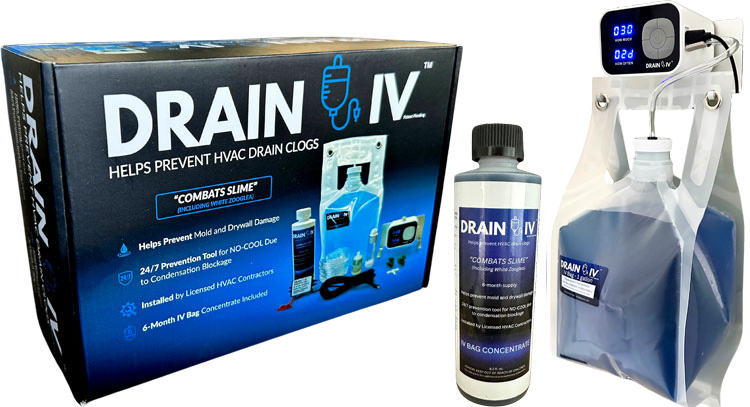
- Consider Automated Solutions: Products like DRAIN IV can help keep your AC drain lines clear and prevent leaks by automatically treating the system with safe cleaning agents.
The DRAIN IV Solution
Using DRAIN IV is a proactive way to prevent the health risks associated with leaky air conditioners. This automated system delivers gentle, acid-based treatments to your HVAC drain line, preventing clogs and eliminating the damp environment where mold and bacteria thrive. With DRAIN IV, you can enjoy cleaner air, fewer health risks, and peace of mind knowing your system is protected year-round.
A leaky air conditioner is not just an inconvenience—it’s a health hazard. By understanding the risks and taking proactive steps like using DRAIN IV, you can protect your family from respiratory problems, allergies, and other health issues caused by mold, bacteria, and poor indoor air quality.
Shop Tool Reviews DRAIN IV in this informative video.
For more information, reach out to us today.
Promote our brand, reap the rewards—apply to our affiliate program today! https://shorturl.fm/UVt61
Start earning every time someone clicks—join now! https://shorturl.fm/F4gGP
Start profiting from your network—sign up today! https://shorturl.fm/r1dbP
Unlock exclusive rewards with every referral—apply to our affiliate program now! https://shorturl.fm/mUvtF
Share your unique link and cash in—join now! https://shorturl.fm/GEKty
Unlock exclusive rewards with every referral—enroll now! https://shorturl.fm/CURpB
Become our partner and turn clicks into cash—join the affiliate program today! https://shorturl.fm/3mdRc
Share our link, earn real money—signup for our affiliate program! https://shorturl.fm/gC4YI
Monetize your traffic with our affiliate program—sign up now! https://shorturl.fm/1Zv3M
Become our partner and turn clicks into cash—join the affiliate program today! https://shorturl.fm/FHPfV
Unlock exclusive rewards with every referral—enroll now! https://shorturl.fm/WxWHk
Earn passive income this month—become an affiliate partner and get paid! https://shorturl.fm/mcGVz
Monetize your audience—become an affiliate partner now! https://shorturl.fm/fLk9T
Share your unique link and earn up to 40% commission! https://shorturl.fm/Rx7ud
Partner with us for high-paying affiliate deals—join now! https://shorturl.fm/Db80m
Tap into unlimited earnings—sign up for our affiliate program! https://shorturl.fm/3M3VU
Refer friends and colleagues—get paid for every signup! https://shorturl.fm/OW2wJ
Refer customers, collect commissions—join our affiliate program! https://shorturl.fm/eeaxD
Your audience, your profits—become an affiliate today! https://shorturl.fm/MjCra
Start earning passive income—become our affiliate partner! https://shorturl.fm/VwDXO
Start earning instantly—become our affiliate and earn on every sale! https://shorturl.fm/tGMOV
Earn up to 40% commission per sale—join our affiliate program now! https://shorturl.fm/bWx1T
Refer friends, collect commissions—sign up now! https://shorturl.fm/cuKLT
Your audience, your profits—become an affiliate today! https://shorturl.fm/KLbaW
Earn passive income with every click—sign up today! https://shorturl.fm/GOT7r
Promote our brand and get paid—enroll in our affiliate program! https://shorturl.fm/k3YgA
Partner with us for generous payouts—sign up today! https://shorturl.fm/IHCtx
Apply now and receive dedicated support for affiliates! https://shorturl.fm/3q5vE
Join our affiliate community and maximize your profits! https://shorturl.fm/ZR1fi
Monetize your traffic with our affiliate program—sign up now! https://shorturl.fm/Gs63k
Earn passive income on autopilot—become our affiliate! https://shorturl.fm/2Zzrp
Apply now and receive dedicated support for affiliates! https://shorturl.fm/KUIlq
Unlock top-tier commissions—become our affiliate partner now! https://shorturl.fm/XPHEY
Join our affiliate community and maximize your profits—sign up now! https://shorturl.fm/QvgwE
Unlock exclusive rewards with every referral—apply to our affiliate program now! https://shorturl.fm/cBMrN
Share our products, earn up to 40% per sale—apply today! https://shorturl.fm/sHyIN
Turn referrals into revenue—sign up for our affiliate program today! https://shorturl.fm/ahDrD
Promote our products—get paid for every sale you generate! https://shorturl.fm/AiA52
Refer friends and colleagues—get paid for every signup! https://shorturl.fm/KpF38
Share our products, reap the rewards—apply to our affiliate program! https://shorturl.fm/V7NbH
Start earning passive income—become our affiliate partner! https://shorturl.fm/bCnSy
Share our offers and watch your wallet grow—become an affiliate! https://shorturl.fm/jM5ku
Partner with us and enjoy high payouts—apply now! https://shorturl.fm/AljCH
Unlock exclusive rewards with every referral—enroll now! https://shorturl.fm/Ym9oJ
https://shorturl.fm/napgv
https://shorturl.fm/d2Odg
https://shorturl.fm/PZVRv
https://shorturl.fm/gUgcb
https://shorturl.fm/eE7kQ